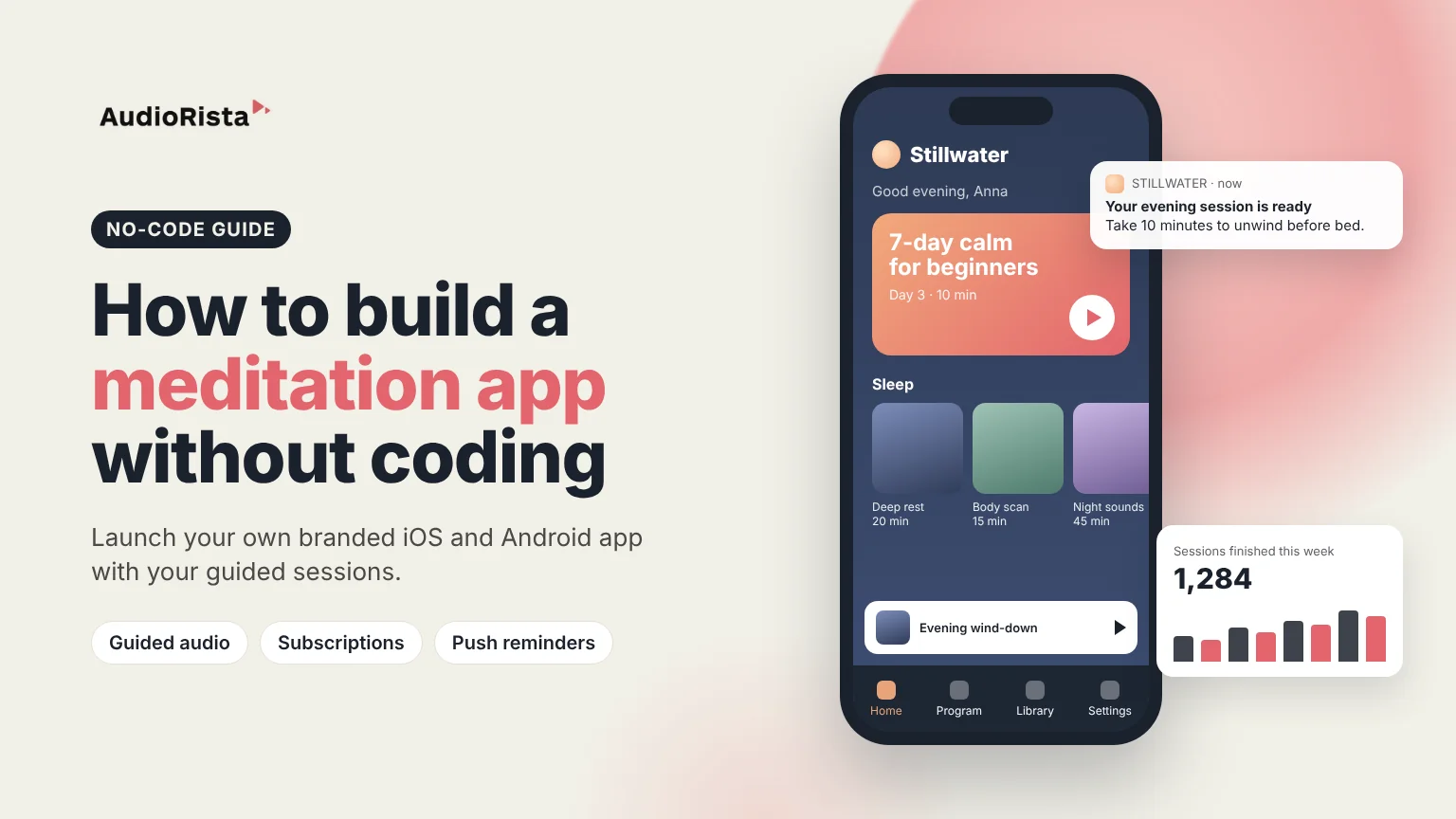
There are three ways to build a meditation app: hire developers to build it from scratch, have an agency adapt a template, or launch it yourself on a no-code platform. Custom development gives you the most freedom, but it takes months and a large budget. A no-code platform like Audiorista lets meditation teachers, studios and wellness brands launch their own branded iOS and Android app with their guided sessions, without writing code. This guide compares the options, lists the features users expect, and walks you through building your own app step by step.
Why meditation teachers build their own app
Your guided meditations are the product. On marketplaces such as Insight Timer or a podcast feed, they sit next to thousands of others, and the platform owns the relationship with your listeners. In your own app, your sessions, your brand and your subscribers are yours. Listeners find you on their home screen, you decide what is free and what is paid, and you can reach them directly when a new session is ready.
Three ways to build a meditation app
Custom development
Agency with a template
No-code platform
Time to launch
Several months
Weeks to months
Days to weeks
Upfront cost
High: tens of thousands of dollars
Medium to high
A monthly subscription
Updates and maintenance
Your developers
Billed by the agency
Included in the platform
Adding new sessions
Depends on the admin you build
Often through the agency
Yourself, from a dashboard
Best for
Funded startups building unique features
Brands that want a hands-off project
Teachers, studios and wellness brands with their own content
For scale: one development agency quotes $40,000 to $75,000 and 14 to 20 weeks for a first version of a Headspace-style app, before ongoing maintenance.
Features a meditation app needs
Guided audio sessions, grouped into themes such as sleep, stress, focus and beginners.
Programs and courses that take listeners through sessions in order, for example a 7-day introduction.
Video for yoga, breathwork or movement, next to your audio.
Free and premium content, so new listeners can try you before they subscribe.
Reminders through push notifications, which help listeners build a daily habit.
Your own brand: your name, logo and colors in the App Store and Google Play.
Insight into listening: which sessions people play and how much of them they finish.
How to build your meditation app with Audiorista, step by step
Record your sessions. Clear voice and calm background sound matter more than expensive equipment.
Upload and organize them. Add your audio and video, one by one or in bulk, and group them into collections such as Sleep, Stress relief and a beginner course.
Design your app with your logo, colors and app icon.
Choose how you charge: subscriptions and bundles inside the app, or single programs sold on your own website and unlocked in the app.
Preview it on your phone before anyone else sees it.
Publish to the App Store and Google Play.
Grow: send push notifications when a new session is out, and use analytics to see what your listeners finish.
Start short. Five- to ten-minute sessions are easier for beginners to fit into a day.
Publish on a schedule. A new session every week gives subscribers a reason to stay.
Build programs, not just single tracks. A clear path keeps listeners going.
Use reminders with care. One well-timed notification works better than several.
FAQ
How much does it cost to build a meditation app?
Custom development of a first version typically costs tens of thousands of dollars and takes several months. With a no-code platform like Audiorista you pay a monthly subscription instead and can launch in days to weeks.
Can I build a meditation app without coding?
Yes. With a no-code platform you upload your sessions, design the app and publish it to iOS and Android without writing code.
How long does it take to build a meditation app?
With custom development, usually several months. With Audiorista, as long as it takes to upload your content and design your app, often days to weeks.
How do meditation apps make money?
Mostly through subscriptions, often with a free tier to attract new listeners. Bundles of programs and single courses sold through your own website add extra income.